
I will publish the piece even though I have very little probability of it being thoroughly read or shared.
Naturally, if the article featured images of cats or dogs, which most of us love and care for, our appreciation and outrage would be overwhelming.
However, the post doesn’t contain any pictures of people in their panties.
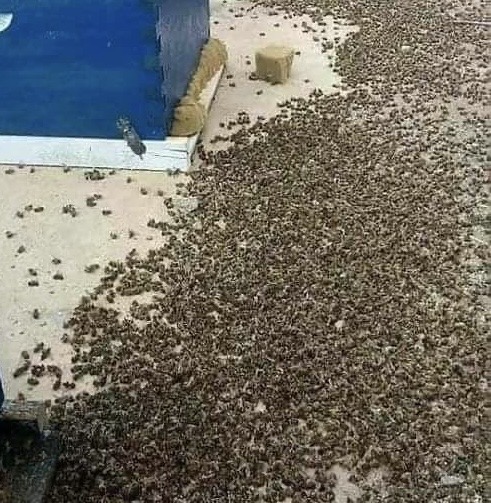
Sadly, many of bees have perished as a result of the insecticides used in our country. Unfortunately, this is the conclusion of our life cycle.
If bees disappear from the face of the Earth, we humans will not have more than four years to live.
Why are bees considered the most important creatures on Earth?
We have all benefited from the extraordinary attributes of bee products since we were small children, and we all understand the huge relevance of bees in our daily lives. The results of studies conducted on their presence are as follows:
The Earthwatch Institute concluded during the recent London Royal Geographic Society meeting that bees are the most important living thing on Earth. In addition to this news, however, researchers also proclaimed that bees are now regarded as insects with a high risk of extinction.
“If bees disappeared, humanity would only be able to survive for four years at most.”
Albert Einstein, who passed away,
Recent studies show that bee populations have decreased by up to 90% globally, with regional variations in the causes. Massive deforestation, a lack of secure nesting locations, a shortage of flowers, careless pesticide usage, altered soil, and a decline in beekeepers are a few of the primary factors.
These insects are essential to almost 70% of global agriculture, and it may be argued that bees are responsible for 70 out of every 100 items that humans eat.
In addition, bee pollination is necessary for plant reproduction, which provides millions of animals with their primary food source. The fauna would eventually start to disappear without it.
Exist answers for this issue?
There are answers, but given the detrimental agricultural and production practices in Romania, they are difficult to apply in today’s society.
However, some expert ideas have been put out with the hopes of being put into practice as quickly as possible:
restricting the use of harmful pesticides, not just outlawing them. The recommendation is to switch to insecticides that don’t harm pollinators.
encouraging all-natural alternatives for farming.
investigating and keeping an eye on bee health, welfare, and conservation on a continuous basis.
encouraging initiatives that allow the public to assist beekeepers and contribute to the bee-saving effort, such as buying organic honey or participating in national initiatives like “Adopt a Hive.” You can take part in this kind of endeavor by using the initiative.